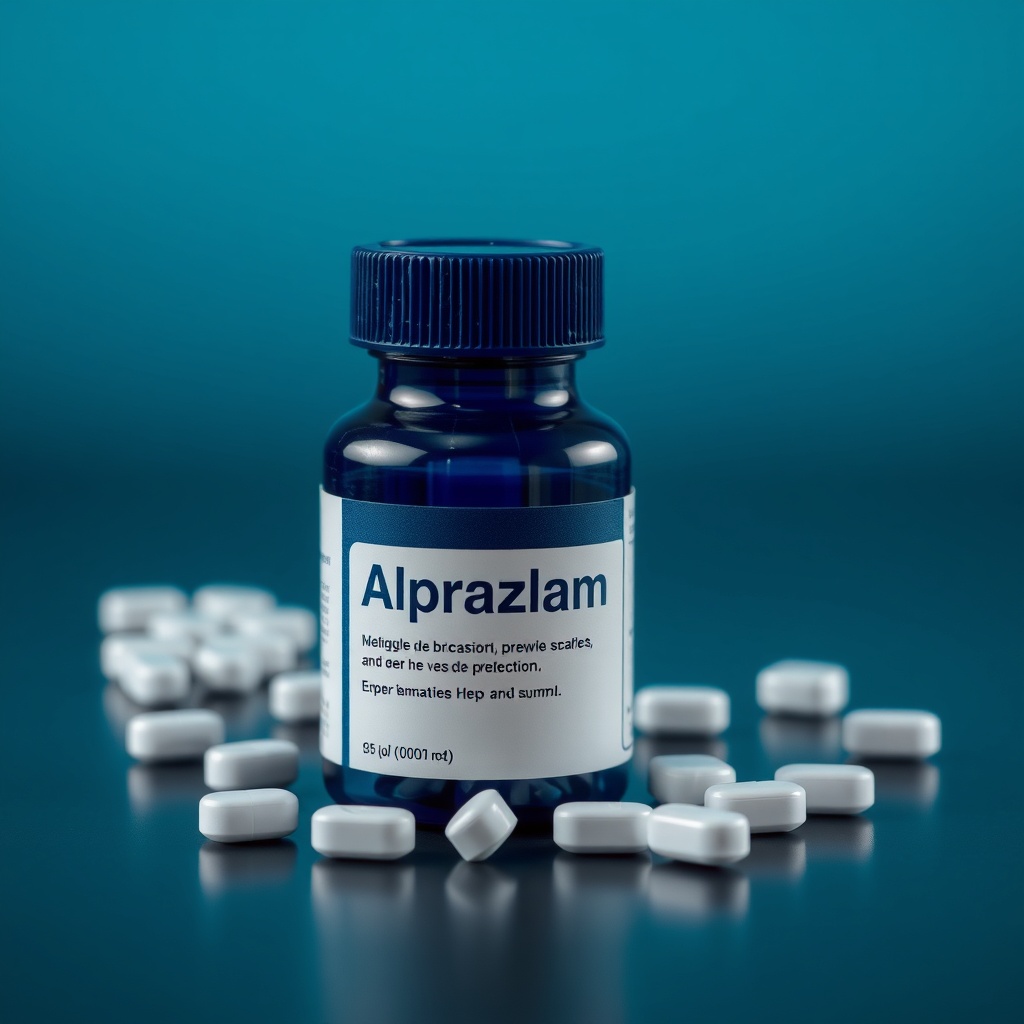
Alprazolam (Xanax) is one of the most effective medications for acute anxiety and panic attacks — it works within 15-30 minutes and provides genuine relief. But it is also one of the most dependency-forming medications prescribed today. Physical dependence can develop in as little as 2-4 weeks of regular use, and withdrawal can be medically dangerous. This is a short-term crisis tool, not a long-term solution. Use it with full awareness of the risks.
What is Alprazolam?
Alprazolam is a benzodiazepine — a class of medication that has been used since the 1960s to treat anxiety, panic disorder, and insomnia. You likely know it by its most famous brand name: Xanax.
It is one of the most prescribed psychiatric medications in the world, and for good reason: it works, and it works fast. For someone in the grip of a panic attack or severe anxiety episode, alprazolam can bring relief within 15-30 minutes. Few other medications match that speed.
However, alprazolam's effectiveness comes with a significant trade-off. It is among the most dependency-forming benzodiazepines due to its short half-life and potent effects. The medical community has become increasingly cautious about prescribing it, and for good reason. Understanding both its benefits and its risks is essential before considering it as a treatment option.
Alprazolam is classified as a Schedule IV controlled substance internationally and falls under the Dangerous Drugs Act in Malaysia. It is legal with a prescription but tightly regulated.
How It Works
GABA Receptor Modulation — Full Agonist
Like all benzodiazepines, alprazolam works by enhancing the effects of GABA (gamma-aminobutyric acid), your brain's primary inhibitory neurotransmitter. GABA's job is to slow down neuronal activity — it is the brain's natural "calm down" signal.
Alprazolam binds to GABA-A receptors and acts as a full agonist — meaning it amplifies GABA's effects across all receptor subtypes (alpha-1 through alpha-5). This broad binding profile is why alprazolam produces multiple effects simultaneously:
- Alpha-1: Sedation and sleep induction
- Alpha-2: Anxiety reduction (the main therapeutic target)
- Alpha-3: Muscle relaxation
- Alpha-5: Amnesia (the forgetting — this is a side effect, not a benefit)
This broad activity is why alprazolam feels so effective — it simultaneously calms your mind, relaxes your body, and reduces the physical symptoms of anxiety (racing heart, shallow breathing, muscle tension). But it is also why it carries more risks than more selective medications.
Pharmacokinetics
Alprazolam is absorbed rapidly, reaching peak blood levels within 1-2 hours. Its half-life is 6-12 hours (average around 11 hours), which is relatively short for a benzodiazepine. This short half-life means effects come on fast and wear off fast — which is both its strength (rapid relief) and its weakness (the brain quickly notices when it is gone, driving both psychological and physical dependence).
Who It's For
Prescription required — doctor assessment needed.
Alprazolam is clinically indicated for specific conditions, not general stress management:
Panic Disorder
Recurrent, unexpected panic attacks with intense physical symptoms — racing heart, chest tightness, feeling of impending doom
Severe Acute Anxiety
Anxiety episodes that are debilitating enough to prevent normal functioning — not everyday work stress
Anxiety-Driven Insomnia
Inability to sleep specifically because of anxiety or racing thoughts — when the primary problem is the anxiety, not the sleep
Bridge Therapy
Short-term relief while waiting for longer-acting medications (SSRIs, buspirone) to reach therapeutic levels — typically 2-4 weeks
What to Expect
Initial Absorption
Alprazolam begins absorbing quickly. Some people notice the first subtle shift in anxiety levels within 15 minutes, especially on an empty stomach.
Onset of Relief
Anxiety noticeably decreases. Physical symptoms — racing heart, muscle tension, shortness of breath — begin to ease. A sense of calm replaces the edge. This is the phase that makes alprazolam so effective for panic attacks.
Peak Effects
Maximum therapeutic effect. You feel calm, potentially slightly drowsy. Cognitive function may be slightly slowed — reaction times and complex decision-making are impaired. Do not drive or operate machinery.
Wearing Off
Effects gradually diminish. Some people notice a return of anxiety symptoms as the medication clears. This "interdose withdrawal" is one of the mechanisms that drives dependency — your brain starts to expect the next dose.
Side Effects & Risks
Common Side Effects
- Drowsiness and sedation — the most common effect, especially at higher doses
- Cognitive impairment — slowed thinking, difficulty concentrating, impaired memory formation
- Coordination problems — unsteady gait, increased fall risk (especially in older adults)
- Fatigue and lethargy — can persist into the next day
- Slurred speech — at higher doses
Serious Risks
Respiratory depression: Combining alprazolam with opioids, alcohol, or other CNS depressants can be fatal. This combination suppresses breathing and is a leading cause of accidental overdose deaths. Never combine these substances.
Paradoxical reactions: Some people — particularly older adults — experience increased agitation, aggression, or disinhibition instead of calmness. If this occurs, stop taking it and contact your doctor immediately.
Cognitive decline with long-term use: Extended benzodiazepine use has been associated with increased risk of dementia in observational studies. While causation is not fully established, this is a genuine concern for long-term users.
Dependency & Withdrawal
This section is the most important on this page. Alprazolam dependency is a serious medical issue that affects a significant percentage of regular users.
How Fast Does Dependency Develop?
Physical dependence on alprazolam can develop in as little as 2-4 weeks of daily use. This is faster than most other benzodiazepines because of alprazolam's short half-life and high potency. Your brain adapts to the drug's presence by downregulating its own GABA production — when the drug is removed, the brake pedal is gone and your nervous system overactivates.
Withdrawal Symptoms
Alprazolam withdrawal can be medically dangerous. Unlike opioid withdrawal (which is miserable but rarely fatal), benzodiazepine withdrawal can cause seizures that are potentially life-threatening. Never stop alprazolam abruptly after regular use.
Withdrawal symptoms include:
- Rebound anxiety — anxiety worse than what you started with
- Insomnia — inability to sleep for days
- Tremors and muscle twitching
- Sensory hypersensitivity — sounds, lights, and touch feel overwhelming
- Depersonalisation — feeling disconnected from reality
- Seizures — in severe cases, particularly with abrupt discontinuation of high doses
Tapering must be done gradually under medical supervision, typically reducing the dose by 10-25% every 1-2 weeks. Some patients take months to fully discontinue. This is not a failing — it is a physiological reality.
Legal Status in Malaysia
Alprazolam is classified under the Dangerous Drugs Act 1952 in Malaysia as a psychotropic substance. This places it under stricter controls than many other medications:
- Requires a valid prescription from a registered medical practitioner
- Dispensing is tracked and recorded by pharmacies
- Possession without a valid prescription is a criminal offence
- Prescriptions are typically limited to short courses (7-14 days) with strict documentation
- Doctors must maintain detailed records of alprazolam prescriptions
These restrictions exist for good reason — alprazolam misuse and diversion are genuine public health concerns. Legitimate medical use with proper supervision is fully legal.
Alprazolam vs Other Anxiolytics
Key insight: Alprazolam's fast onset makes it feel like the best anxiolytic, but its short half-life is precisely what makes withdrawal so difficult. Diazepam, with its much longer half-life, is actually easier to taper off — which is why doctors often switch patients from alprazolam to diazepam before beginning a withdrawal taper.
When to Consider Alprazolam
Alprazolam may be appropriate in these specific situations:
- Acute panic disorder — you are having panic attacks that are debilitating and you need immediate relief while other treatments take effect
- Bridge therapy — a 2-4 week bridge while starting an SSRI or SNRI (which take weeks to reach full effect)
- Infrequent situational use — once or twice a month for specific triggering situations (severe flight anxiety, specific phobias), not daily use
- Emergency situations — acute anxiety crisis where immediate intervention is needed
Alprazolam is not the right choice for:
- General everyday stress or work pressure
- Long-term anxiety management (SSRIs, therapy, and buspirone are safer)
- Primary insomnia without anxiety (Z-drugs like zolpidem are more appropriate)
- People with a history of substance abuse
Better Long-Term Alternatives
If you are dealing with chronic anxiety, these approaches are safer and more sustainable than benzodiazepines:
- CBT (Cognitive Behavioural Therapy) — the gold standard for anxiety disorders. Studies show CBT is as effective as medication in the long term, without dependency risk. Available through therapists and structured online programmes.
- SSRIs (e.g., escitalopram, sertraline) — first-line pharmacological treatment for generalised anxiety disorder and panic disorder. Takes 2-4 weeks to work but provides sustained relief without dependency.
- Buspirone — a non-addictive anxiolytic that works through serotonin pathways. No sedation, no dependency, no withdrawal. Requires 2-4 weeks to work.
- Exercise — 30 minutes of moderate exercise produces anxiolytic effects comparable to a low dose of medication. Consistent exercise is one of the most evidence-based interventions for anxiety.
- Mindfulness and meditation — 8 weeks of mindfulness practice has been shown to physically reduce amygdala reactivity (your brain's fear centre). This is structural change, not just relaxation.
- Magnesium and L-theanine — mild natural anxiolytics that support GABA function without the risks of pharmaceuticals. Useful as part of a broader approach.
Frequently Asked Questions
How do I get alprazolam in Malaysia?
Alprazolam requires a prescription from a licensed Malaysian doctor. Due to its classification under the Dangerous Drugs Act, prescriptions are more closely monitored than many other medications. Speak with one of our doctors via WhatsApp to discuss whether alprazolam is clinically appropriate for your situation.
Is Xanax the same as alprazolam?
Yes. Xanax is the original brand name for alprazolam, manufactured by Pfizer. Kalma is another common brand. They all contain the same active ingredient. Generic alprazolam is equally effective and typically more affordable.
How quickly will I become dependent?
Physical dependence can develop in as little as 2-4 weeks of daily use. Psychological dependence (feeling you need it to cope) can develop even faster. Intermittent use (no more than 2-3 times per week) significantly reduces this risk. Your doctor should discuss a clear usage plan with time limits.
Can I drink alcohol while taking alprazolam?
Absolutely not. Alcohol and alprazolam both depress the central nervous system. Together they can cause dangerous respiratory depression, loss of consciousness, and death. This is not an exaggeration — this combination is involved in a significant number of accidental overdose deaths worldwide.
Is alprazolam safe for sleep?
Alprazolam can help with sleep, but it is not a sleep medication. It reduces anxiety that prevents sleep. If your insomnia is primarily anxiety-driven, alprazolam may help short-term. For primary insomnia, Z-drugs like zolpidem or eszopiclone are more appropriate and carry lower dependency risk. Your doctor will help determine which is right for your situation.
What should I do if I want to stop taking alprazolam?
Do not stop abruptly. Work with your doctor to create a gradual taper schedule, typically reducing your dose by 10-25% every 1-2 weeks. Your doctor may switch you to a longer-acting benzodiazepine (like diazepam) first, which makes the taper smoother. The process may take weeks to months depending on your dose and duration of use.
Is alprazolam suitable for long-term use?
No. Current medical guidelines recommend alprazolam for short-term use only (2-4 weeks, maximum 8-12 weeks in specific cases). Long-term benzodiazepine use is associated with tolerance, dependency, cognitive impairment, and potentially increased dementia risk. If your anxiety requires ongoing treatment, SSRIs, buspirone, or therapy are safer long-term options.