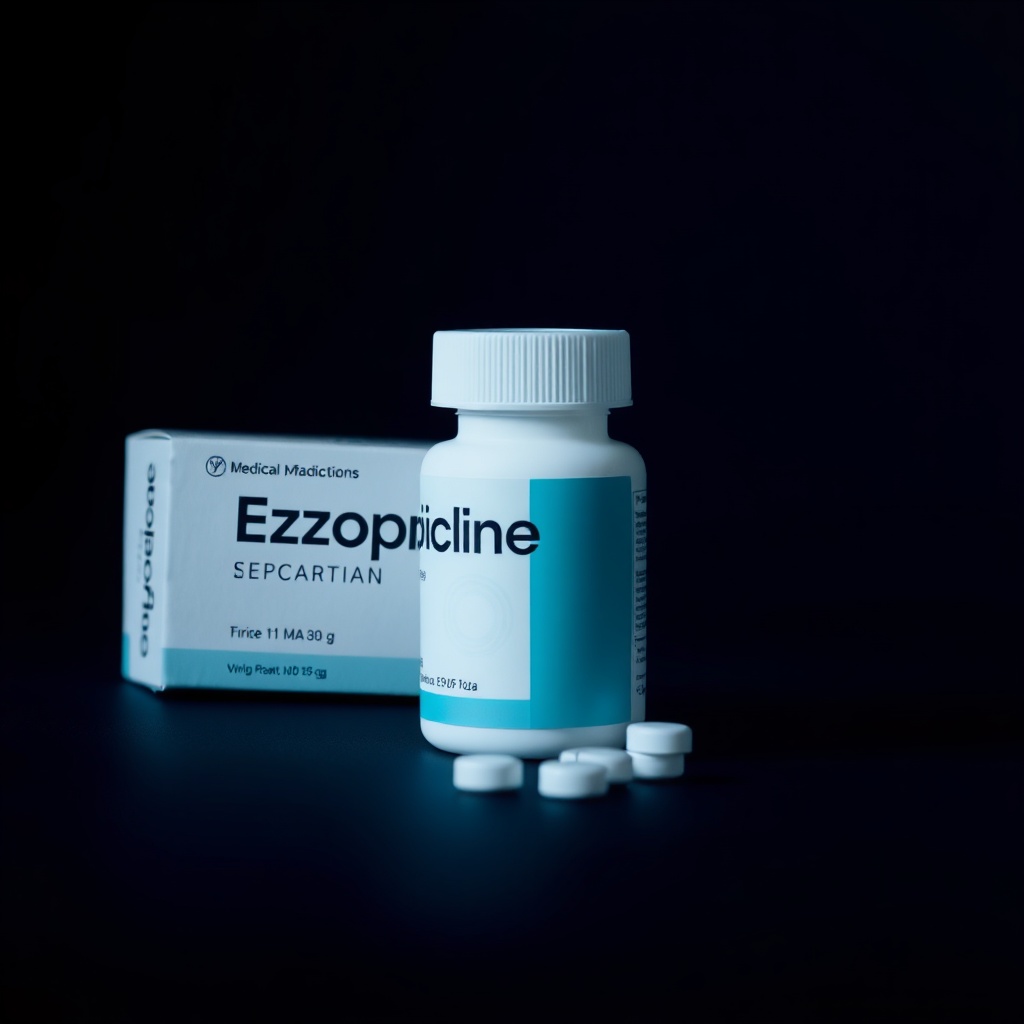
Eszopiclone (Lunesta) is a Z-drug designed for people who wake up at 3am and cannot fall back asleep. While zolpidem excels at sleep onset, eszopiclone's longer duration helps with sleep maintenance — staying asleep through the entire night. It is one of the few sleep medications studied for longer-term use, though dependency remains a risk. The signature side effect is a metallic taste that some find tolerable and others cannot stand.
What is Eszopiclone?
Eszopiclone is a non-benzodiazepine hypnotic (Z-drug) sold under the brand name Lunesta. It is the purified active isomer of zopiclone — essentially the more refined version of an older sleep medication.
Zopiclone is a racemic mixture, meaning it contains two mirror-image molecules (S-isomer and R-isomer). Research showed that the S-isomer was responsible for nearly all the sleep-promoting activity, while the R-isomer contributed mostly to side effects. Eszopiclone is the isolated S-isomer — giving you the therapeutic benefit with a cleaner pharmacological profile.
What makes eszopiclone clinically distinct is its longer duration of action compared to zolpidem. While zolpidem primarily helps you fall asleep, eszopiclone helps you fall asleep and stay asleep — making it particularly valuable for people whose insomnia involves middle-of-the-night or early-morning waking.
Eszopiclone is also notable for being one of the only sleep medications with clinical data supporting use beyond the standard 2-4 week window. Studies have demonstrated sustained efficacy over 6-12 months, though this does not eliminate the need for periodic reassessment of whether continued use is appropriate.
How It Works
GABA-A Modulation with Longer Duration
Like other Z-drugs, eszopiclone works by binding to GABA-A receptors in the brain, enhancing the natural inhibitory signalling that promotes sleep. It has selectivity for the alpha-1 subunit (responsible for sedation), though somewhat less selective than zolpidem.
The key pharmacological difference is half-life:
- Zolpidem half-life: ~2.5 hours — covers sleep onset, fades by mid-night
- Eszopiclone half-life: ~6 hours — covers both sleep onset and maintenance through the night
This longer duration means eszopiclone's sedative effect persists through the second half of the night — the window when many insomnia sufferers experience their worst symptoms. The trade-off is a higher chance of morning residual effects, particularly at the 3mg dose.
Dosage Range
Eszopiclone is available in 1mg, 2mg, and 3mg tablets. Doctors typically start at the lowest effective dose and adjust based on response:
- 1mg: Helps with sleep onset. Minimal next-day impairment. Good starting point.
- 2mg: Improved sleep onset and moderate maintenance. Balances efficacy and side effects.
- 3mg: Maximum effect on both onset and maintenance. Higher risk of next-day drowsiness and metallic taste. Reserved for more severe insomnia.
Who It's For
Prescription required — doctor assessment needed.
Eszopiclone addresses a specific insomnia pattern that other Z-drugs may not cover well:
Middle-of-Night Waking
You fall asleep fine but wake at 2-4am and cannot get back to sleep — lying awake until the alarm
Early Morning Waking
You consistently wake 1-2 hours before you need to, feeling unrested but unable to return to sleep
Fragmented Sleep
You wake multiple times throughout the night, never achieving deep consolidated rest
Chronic Insomnia
Sleep problems persisting for months where longer-term pharmacological support may be needed alongside behavioural interventions
What to Expect
Sleep Onset
Drowsiness begins within 15-30 minutes. Take eszopiclone immediately before getting into bed — do not take it and then continue activities. Take on an empty stomach or with a light meal (heavy or high-fat meals delay absorption).
Deep Sleep Phase
Eszopiclone supports the transition into deep slow-wave sleep. Most users report feeling their sleep is deeper and more restorative than without medication.
Sustained Maintenance
This is where eszopiclone differentiates itself. Its longer half-life maintains sleep-promoting effects through the second half of the night — reducing the 3am wake-ups that shorter-acting Z-drugs do not cover.
Morning
With an 8-hour sleep window, most of the medication has cleared. Some residual drowsiness is possible, especially at the 3mg dose or if sleep time was shorter than 7 hours. Allow extra time before driving or making critical decisions.
Eszopiclone vs Zolpidem
This is the key clinical question. Both are Z-drugs, but they serve different insomnia profiles.
The simple rule: If your problem is falling asleep, start with zolpidem. If your problem is staying asleep or waking too early, eszopiclone is the better fit. If both are an issue, eszopiclone covers more bases — though zolpidem ER (extended release) is another option your doctor may consider.
Side Effects & Risks
Common Side Effects
- Metallic or bitter taste (dysgeusia) — this is the signature eszopiclone side effect, reported by approximately 30% of users at the 3mg dose. It occurs because the drug is partially excreted in saliva. Some people barely notice it; others find it intolerable. It typically occurs within an hour of taking the medication and can persist into the next morning.
- Next-day drowsiness — more common than with zolpidem due to the longer half-life, especially at 3mg. The FDA reduced the recommended starting dose to 1mg in 2014 specifically due to next-morning impairment concerns.
- Headache — reported by approximately 5-10% of users
- Dry mouth — mild and usually transient
Serious Risks
Complex sleep behaviours: Like all Z-drugs, eszopiclone carries a risk of sleepwalking, sleep-driving, sleep-eating, and other activities performed while not fully conscious. Stop taking eszopiclone and contact your doctor immediately if this occurs.
Dependency: While eszopiclone has longer-term efficacy data than other Z-drugs, physical and psychological dependence can still develop with regular use. Discontinuation should be gradual, not abrupt.
CNS depression: Do not combine with alcohol, opioids, or other sedatives. The combination increases the risk of excessive sedation, respiratory depression, and complex sleep behaviours.
The Metallic Taste — What to Know
The bitter/metallic taste deserves special mention because it is the primary reason some patients switch away from eszopiclone. A few practical notes:
- It is dose-dependent — more pronounced at 3mg, often minimal at 1mg
- It does not diminish much with continued use (unlike most side effects)
- Some people find that brushing teeth or using mouthwash before bed reduces it
- If the taste is unbearable, this is a legitimate reason to discuss alternative medications with your doctor
Legal Status in Malaysia
Eszopiclone is classified as a psychotropic substance in Malaysia, regulated under the Poisons Act 1952. Key points:
- Legal with a valid prescription from a registered medical practitioner
- Can only be dispensed by licensed pharmacists or from registered medical facilities
- Possession without a prescription is an offence
- Less widely stocked than zolpidem in Malaysian pharmacies — availability may be limited at some outlets
Eszopiclone is less commonly prescribed in Malaysia than zolpidem, partly due to lower familiarity among GPs and partly due to limited local distribution. This does not reflect the medication's clinical value — it reflects market dynamics. Doctors experienced in sleep medicine are familiar with eszopiclone and can prescribe it when appropriate.
When to Consider Eszopiclone
Eszopiclone may be the right choice when:
- Your primary insomnia issue is staying asleep, not falling asleep
- You have tried zolpidem and it helped you fall asleep but you still wake at 3-4am
- You need sleep medication for more than just a few weeks and want something with longer-term safety data
- Your insomnia is chronic (lasting 3+ months) and you need pharmacological support alongside behavioural interventions
- You have already optimised sleep hygiene and tried non-pharmacological approaches without adequate improvement
Eszopiclone is not the best choice if:
- Your problem is purely falling asleep (zolpidem is faster-acting and has less morning carryover)
- You are highly sensitive to taste disturbances
- You need to be maximally alert early the next morning (the longer half-life means more potential for residual effects)
Frequently Asked Questions
How do I get eszopiclone in Malaysia?
Eszopiclone requires a prescription from a licensed Malaysian doctor. It is less commonly stocked than zolpidem, so availability may vary by pharmacy. Our doctors can assess whether eszopiclone is appropriate for your sleep pattern and help arrange access.
Is eszopiclone the same as zopiclone?
Not exactly. Eszopiclone is the purified S-isomer of zopiclone. Think of it as the refined, more targeted version. It has improved efficacy at lower doses and a somewhat cleaner side effect profile compared to racemic zopiclone. They work similarly but are not interchangeable — dosing is different (eszopiclone 2-3mg is roughly equivalent to zopiclone 7.5mg).
Can I take eszopiclone long-term?
Eszopiclone has clinical data supporting efficacy up to 12 months — more than any other Z-drug. However, long-term use should still involve periodic reassessment with your doctor. The goal is always to use the lowest effective dose for the shortest necessary duration while working on non-pharmacological sleep strategies in parallel.
Why does eszopiclone cause a metallic taste?
Eszopiclone and its metabolites are partially excreted through saliva, which produces the characteristic bitter or metallic taste. This is pharmacological, not a sign that anything is wrong. It is dose-dependent — lower doses produce less taste disturbance. If intolerable, discuss alternatives with your doctor.
Is eszopiclone stronger than zolpidem?
Stronger is not the right framing. They have different strengths. Zolpidem acts faster and is better at inducing sleep onset. Eszopiclone lasts longer and is better at maintaining sleep through the night. Neither is categorically stronger — they address different insomnia patterns. Your doctor will recommend based on your specific sleep profile.
Can I take eszopiclone with other medications?
Eszopiclone interacts with other CNS depressants (alcohol, benzodiazepines, opioids, antihistamines) — combining these increases sedation risk. It is metabolised by the CYP3A4 liver enzyme, so medications that inhibit this enzyme (like ketoconazole) can increase eszopiclone levels. Always disclose all medications and supplements during your consultation.