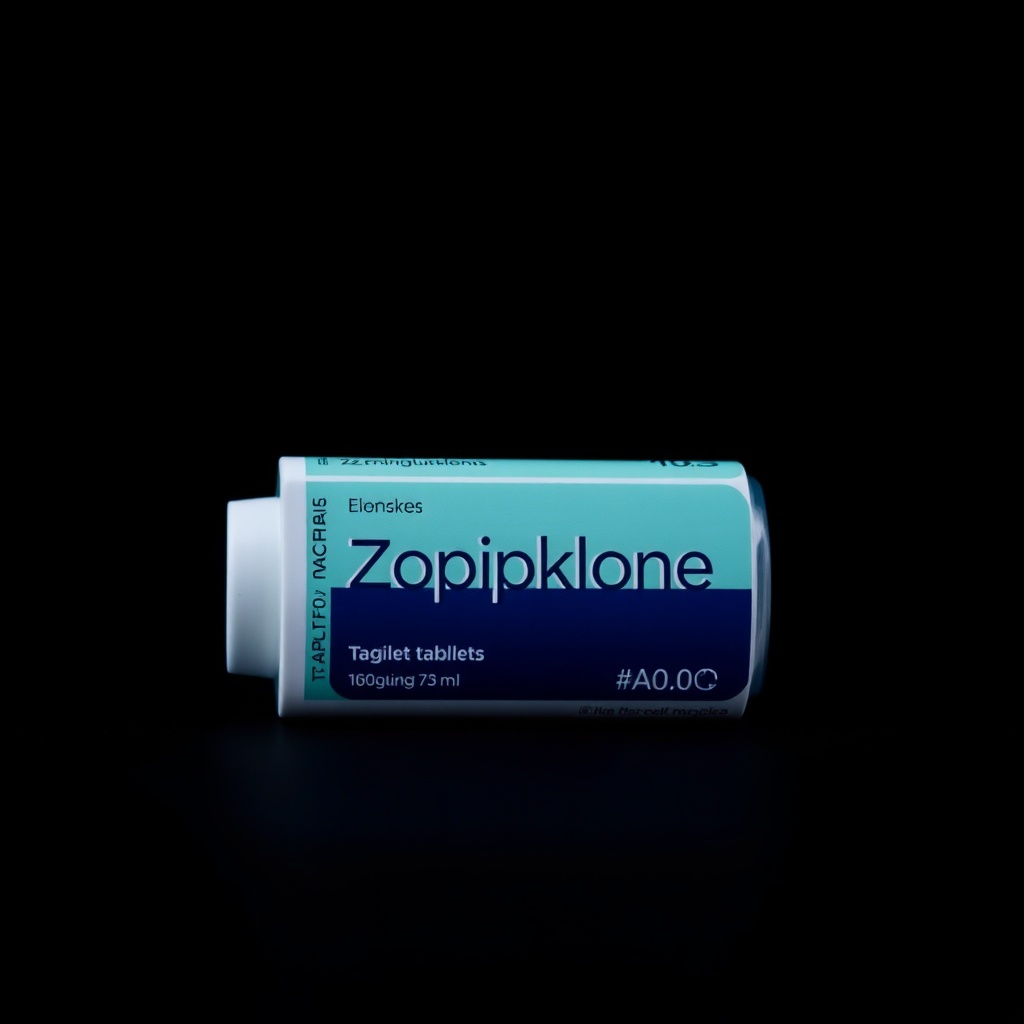
Zopiclone is a widely prescribed Z-drug that helps with both falling asleep and staying asleep. It is the racemic (mixed) version of what became eszopiclone — same family, slightly less refined. The trade-off for its broad effectiveness is the signature bitter metallic taste that most users experience. Available across Malaysia and well-understood by doctors, zopiclone is a reliable short-term option for insomnia when used under medical supervision.
What is Zopiclone?
Zopiclone is a non-benzodiazepine hypnotic (Z-drug) that has been used to treat insomnia since the 1980s. It is sold under the brand names Imovane and Zimovane and is one of the most commonly prescribed sleep medications globally — particularly in Europe, Asia, and the Commonwealth countries.
Chemically, zopiclone is a racemic mixture — meaning it contains two mirror-image molecules in equal proportions: the S-isomer and the R-isomer. Research eventually demonstrated that the S-isomer is responsible for most of the therapeutic sleep effects. This S-isomer was isolated and marketed separately as eszopiclone (Lunesta).
So zopiclone and eszopiclone are closely related — zopiclone is the parent compound, eszopiclone is its refined offspring. Zopiclone remains widely prescribed because it is effective, well-understood, more widely available, and typically less expensive than eszopiclone.
Zopiclone provides a balance between sleep onset and sleep maintenance. It helps you fall asleep within 15-30 minutes and its effects persist long enough to reduce middle-of-the-night waking — making it a versatile option for various insomnia patterns.
How It Works
GABA-A Receptor Modulation
Like all Z-drugs, zopiclone works by binding to GABA-A receptors in the brain, enhancing the effects of GABA — your nervous system's primary inhibitory neurotransmitter. When GABA activity increases, neuronal firing slows, your brain quiets down, and sleep becomes possible.
Zopiclone binds preferentially to the alpha-1 subunit of the GABA-A receptor, which is the subunit most directly responsible for sedation. However, because zopiclone contains both the S and R isomers, its receptor binding profile is slightly broader than eszopiclone's — which contributes to both its effectiveness and its side effect profile.
Pharmacokinetics
- Onset: 15-30 minutes (take immediately before bed)
- Peak blood level: 1.5-2 hours
- Half-life: approximately 5 hours (slightly shorter than eszopiclone's 6 hours)
- Standard dose: 7.5mg for adults; 3.75mg for elderly patients or those with liver impairment
- Duration of effect: 6-8 hours of sleep support
Zopiclone is metabolised by the liver (primarily CYP3A4 and CYP2E1 enzymes). Its metabolites are excreted in urine and, notably, through saliva — which is why the metallic taste is so prominent.
Who It's For
Prescription required — doctor assessment needed.
Zopiclone is suitable for a range of insomnia presentations:
Difficulty Falling Asleep
You lie awake for 30+ minutes at bedtime despite feeling tired, with a racing or restless mind
Night-Time Waking
You wake one or more times during the night and struggle to return to sleep
Transient Insomnia
Sleep disruption caused by travel, jet lag, shift work, or temporary life stress
Stress-Related Sleep Problems
Periods of high work pressure, life transitions, or anxiety that temporarily prevent adequate sleep
What to Expect
Take and Get Into Bed
Take zopiclone 7.5mg on an empty stomach or after a light meal. Get into bed immediately — do not take it while working, eating, or watching TV. Heavy meals delay absorption significantly.
Sleep Onset
Drowsiness increases and you fall asleep. Most users describe this as a natural, gradual sleepiness rather than a sudden knockout. You may notice the metallic taste around this time.
Consolidated Sleep
Zopiclone supports both deep sleep and reduces nighttime awakenings. Sleep architecture (the balance of sleep stages) is generally preserved, which is an advantage over older sedatives that suppress deep sleep and REM.
Morning Waking
With a full 7-8 hour sleep window, residual sedation is usually minimal. Some users report mild grogginess or the lingering metallic taste on waking. Allow yourself time to feel fully alert before driving.
Zopiclone vs Eszopiclone vs Zolpidem
All three are Z-drugs that enhance GABA to promote sleep. Here is how they compare:
Choosing between them: Zopiclone is often the first choice in Malaysian clinical practice because it is effective for both sleep onset and maintenance, widely available, and familiar to most prescribers. If the metallic taste is intolerable, zolpidem is a common switch. If sleep maintenance is the primary concern and longer-term use is anticipated, eszopiclone may be discussed.
Side Effects & Risks
The Signature: Metallic Taste
The bitter metallic taste is the defining experience of zopiclone use. It is reported by the majority of users and is caused by the drug and its metabolites being excreted through saliva. Key facts:
- Occurs within 1-2 hours of taking the dose
- Often persists into the next morning
- Does not diminish significantly with continued use
- Described variously as metallic, bitter, or like sucking on a coin
- Not harmful — but it is the number one reason patients request a switch to zolpidem
Other Common Side Effects
- Dry mouth — related to the taste disturbance mechanism
- Daytime drowsiness — especially if less than 7-8 hours of sleep time is available
- Headache — typically mild and transient
- Dizziness — more common in elderly patients or at higher doses
Serious Risks
Complex sleep behaviours: Sleepwalking, sleep-driving, sleep-eating, and other activities performed while not fully conscious have been reported with all Z-drugs including zopiclone. Risk increases when combined with alcohol or other sedatives. If any complex sleep behaviour occurs, stop taking zopiclone and contact your doctor.
Dependency and tolerance: Physical dependence can develop with regular use, typically after 2-4 weeks of nightly use. Tolerance (needing higher doses for the same effect) can also develop. Zopiclone should be used at the lowest effective dose for the shortest necessary period.
Withdrawal: Abrupt discontinuation after regular use can cause rebound insomnia (worse than the original problem), anxiety, tremors, and in rare cases, seizures. Always taper under medical supervision.
Respiratory depression: Never combine zopiclone with alcohol, opioids, or other CNS depressants. The combination can dangerously suppress breathing.
Who Should NOT Take Zopiclone
- People with severe liver disease (reduced metabolism means the drug accumulates)
- Anyone with myasthenia gravis (zopiclone can worsen muscle weakness)
- People with severe respiratory insufficiency or untreated sleep apnoea
- Pregnant or breastfeeding women
- People with a history of substance misuse (higher dependency risk)
- Anyone who cannot commit to 7-8 hours of sleep after taking it
Legal Status in Malaysia
Zopiclone is classified as a psychotropic substance under the Poisons Act 1952 in Malaysia:
- Legal with a valid prescription from a registered medical practitioner
- Dispensed by licensed pharmacists or from registered medical facilities
- Possession without a valid prescription is an offence
- Widely stocked in Malaysian pharmacies — more readily available than eszopiclone
- Prescriptions are typically for short courses (2-4 weeks) as per clinical guidelines
Zopiclone is well-known to Malaysian doctors and is one of the more commonly prescribed sleep medications in local clinical practice. Most GPs are comfortable prescribing it for short-term insomnia management.
Frequently Asked Questions
How do I get zopiclone in Malaysia?
Zopiclone requires a prescription from a licensed Malaysian doctor. It is widely available at most pharmacies once prescribed. Our doctors can assess your sleep issues via WhatsApp and prescribe zopiclone if clinically appropriate.
Is zopiclone the same as eszopiclone?
Related but not identical. Zopiclone is a racemic mixture containing two isomers. Eszopiclone is the purified S-isomer — the more active one. Eszopiclone is more potent milligram-for-milligram (2-3mg eszopiclone is roughly equivalent to 7.5mg zopiclone) and has a slightly longer half-life. They are not interchangeable without dose adjustment.
Will the metallic taste go away?
Unfortunately, the metallic taste does not significantly diminish with continued use. It is a pharmacological property of how zopiclone is metabolised and excreted through saliva. Some practical tips: brush your teeth after taking it, use mouthwash, or keep water by the bed. If the taste is truly unbearable, zolpidem is the most common alternative (it rarely causes taste disturbance).
Can I take zopiclone every night?
Clinical guidelines recommend zopiclone for short-term use — typically 2-4 weeks maximum. Nightly use beyond this increases the risk of dependency and tolerance. Some doctors prescribe intermittent use (3-4 nights per week) for longer periods. Your doctor will create a usage plan appropriate to the severity and pattern of your insomnia.
What is the right dose for me?
The standard adult dose is 7.5mg taken immediately before bedtime. Elderly patients (over 65) or those with liver impairment typically start at 3.75mg (half a tablet). Your doctor will determine the appropriate dose based on your age, health status, and the severity of your insomnia. Do not increase the dose without medical guidance.
Is zopiclone safer than benzodiazepines?
Zopiclone has a somewhat better safety profile than benzodiazepines for sleep — it is more selective in its receptor binding, has less effect on sleep architecture, and has a lower (but not zero) dependency potential. However, it is not risk-free. The distinction between Z-drugs and benzodiazepines in terms of dependency risk has narrowed as more clinical data has accumulated. Both require careful medical supervision.